

Cover conversations for the people who run kickboxing in Australia — gym owners with a full timetable, the coaches and instructors holding the pads, and the promoters putting fighters under lights. One discipline in our wider combat sports insurance range, treated on its own terms.
Who this is for
The gym, the coach and the card.

Gym owners
Bag work, pad rounds and sparring classes fill the week. Depending on the policy, public liability may respond to claims against the business involving injury to members or visitors, or damage to someone else’s property. Cover for the gym’s own equipment and fit out may be available through a business pack.

Coaches & instructors
Calling contact levels, grading students, matching partners. Professional indemnity may respond to claims connected with your coaching decisions — including where you teach across more than one gym.
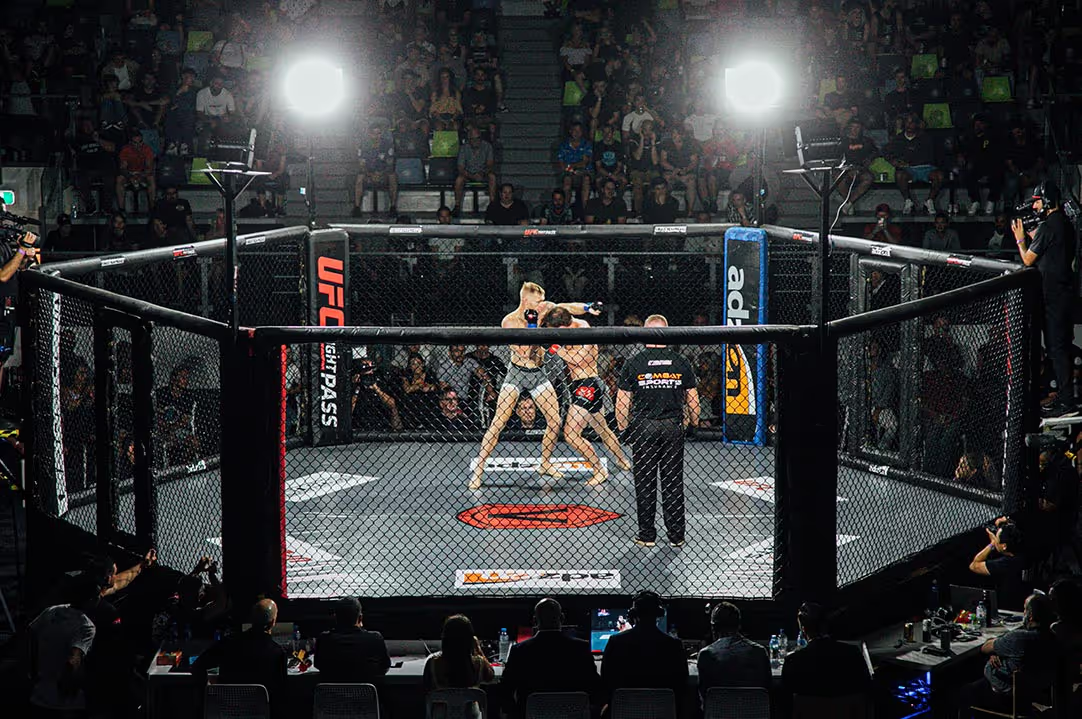
Event promoters
Fight nights, interclub sparring and gradings each carry their own exposures. Event cover is shaped around the card, the crowd and the venue — and may need to be arranged separately.
On the table
What the cover may address.
01
Public liability for the gym
A member catches a heel on the ring apron. A parent watching a kids’ class is struck by a loose bag mount. Public liability cover — up to $20m — is designed to address third-party injury and property damage claims connected with the business, subject to policy terms.
02
Professional indemnity for instructors
How you grade students, pair sparring partners and progress contact are professional decisions. Professional indemnity of up to $5m may respond to claims arising from coaching or advice, depending on the activity, circumstances and policy terms.
03
Class sizes and supervision
How many students per coach, who watches sparring rounds and how assistant instructors are used all shape the risk an insurer is asked to carry. Cover works best when the policy describes the supervision you actually run — not an idealised version of it.
04
Equipment and the space
Bags and mounts, pads, gloves, shin guards, flooring and the ring or cage. Cover may extend to equipment and fit-out, and the state of your gear — checked, logged, replaced when worn — matters if a claim is ever considered.
05
Fight nights and interclub
One-off events, ticketed shows and interclub sparring can sit outside a standard gym policy. They may need to be declared or separately arranged — so raise them before the poster goes up, not after.
Cover is subject to eligibility, the policy terms, conditions, limits and exclusions. Read the relevant policy documents before making a decision.
Risk notes
Kickboxing risk, between rounds.
Where kickboxing risk concentrates
Kickboxing combines punches and kicks, with training that can range from pad work and technical drills to contact sparring under different rulesets. The incidents worth planning for often follow patterns: shins meeting elbows and knees, beginners sparring before they are ready, and worn gear staying in rotation too long.
The habits in this checklist are the kind of process an insurer may ask about, and the kind of records that help if a claim is ever considered. When something does happen mid-round, what you wrote down matters — that is where policy handling earns its keep. For more on training risk, read the kickboxing articles on our blog.
Coach’s notes — Kickboxing
- Shins and lower legs — condition progressively, and treat repeated low-kick rounds as a load to manage, not a rite of passage.
- Gear standards — set a stated standard for gloves, shin guards and mouthguards, check it at the door and retire worn gear.
- Beginner intake — screen new members, keep first sessions technical and make sparring an earned step, not a first-night test.
- Contact progression — call the contact level before every round and record when a member steps up.
- Skill pairing — match weight, experience and intent; a mismatch is where most avoidable injuries start.
General education only. Final procedures and legal documents require suitable professional review.
How the conversation works.
You
Show us how you train.
Classes, contact levels, coaches, gear standards and events — the way the gym actually runs, not the brochure version.CSI
We identify the pressure points.
Supervision gaps, beginner intake, equipment condition and the places a policy might not match what happens on the floor.Together
Shape cover and better process.
A clear recommendation, plus practical checks for contact progression, shin guard standards and partner matching to revisit before renewal.Straight answers
Kickboxing insurance FAQs.
If someone gets hurt sparring at my gym, does the insurance respond?
It may — but be clear on what is responding. It is the gym’s public liability, if a member or visitor brings a claim against the business over an injury on your floor. It is not personal injury cover for the individual who got hurt. Whether it responds depends on how sparring is described in the policy and how it runs on the floor — contact levels, supervision and how partners are matched all count, and it remains subject to policy terms. Tell us exactly how your rounds work and we will match the conversation to it.
I coach at more than one gym. Do I need my own instructor cover?
Often worth a direct conversation. A gym’s policy may not extend to instructors teaching across venues, running private sessions or holding seminars. Professional indemnity designed to address your own coaching decisions may sit alongside the gym’s cover, subject to policy terms — so map out where and how you teach first.
Do fight nights and interclub events need separate cover?
They may. One-off shows, ticketed fight nights and interclub sparring can sit outside a standard gym policy and may need to be declared or separately arranged. Raise the event early — the card, the venue and the crowd each shape what cover is appropriate, subject to policy terms.
Cover is subject to eligibility, the policy terms, conditions, limits and exclusions. Read the relevant policy documents before making a decision.
More cover files
Insurance by discipline.
